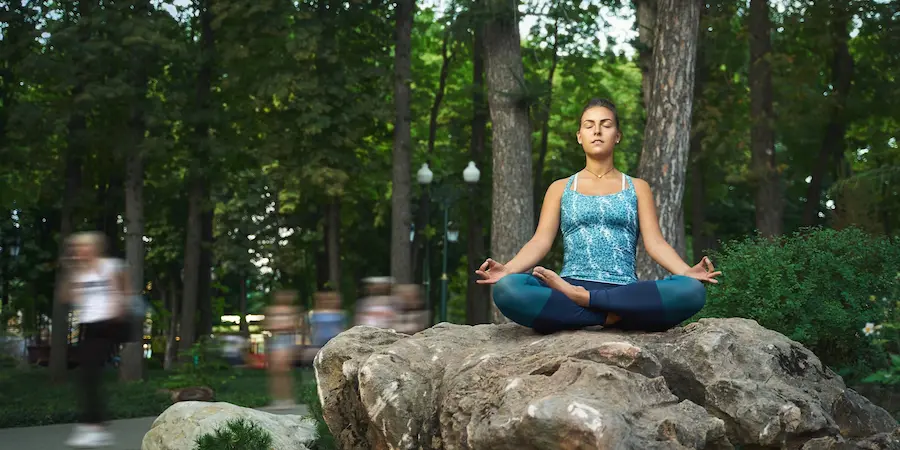
If you’ve never meditated and don’t know where to start, you’re in the right place. Meditation is an ancient practice that aims to train attention so you can better understand your mind and reach greater inner calm. Research continues to explore its benefits, but many people report less stress, improved concentration, better emotional regulation, and a sense of connection with others. Also, you don’t need hours or special accessories: with consistency, even a few minutes a day make a difference. Are you up for trying?
What meditation is and why it’s worth it
Meditating isn’t “blanking out.” It’s observing what happens (your breath, sensations, thoughts, or sounds) without getting hooked by it. With practice, you’ll notice more clarity, greater serenity, and less reactivity. There are many ways to meditate; if one doesn’t suit you, you can switch techniques until you find the one that best fits you. A good starting point is to prioritize frequency over duration: it’s usually more effective to practice 5–10 minutes every day than to do a long session occasionally. And remember, the goal is not to reach a mystical state, but to cultivate presence.
Get ready: space, clothing, and time
- Choose a quiet place with few interruptions. Turn off your phone and the TV. Absolute silence isn’t necessary: distant noises (a dog, a car) can be present without dominating your attention. If it helps, play soft nature sounds or white noise.
- Wear loose, comfortable clothing, and take off your shoes. If it’s cool, wrap yourself in a light jacket or blanket so that the cold doesn’t become a distraction.
- Decide the duration before you begin. To start, 5 minutes is fine. Use an alarm with a gentle tone so you don’t have to watch the clock.
- Do 1–2 minutes of gentle stretches, especially for the neck, shoulders, lower back, and groin if you’ll sit on the floor. This helps prevent stiffness and lets your body enter more relaxed.
Posture and attention: comfortable, stable, and alert
The best posture is the one that lets you be alert without tension. You can sit on a cushion or a chair with your back upright and relaxed, pelvis slightly tilted forward, and shoulders loose. Hands can rest in your lap or on your knees. Not comfortable sitting? You can also meditate standing, lying down, or walking: the key is comfort without drowsiness.
For the eyes, try two options: closed (this often helps at the start) or open with a soft gaze, without focusing on anything in particular, if you tend to get drowsy or have restless mental images. Whatever you choose, aim for a relaxed sense of presence: neither tense nor absent.

Simple techniques to get started
- Mindful breathing: place your attention on the natural rise and fall of the abdomen as you inhale and exhale, without changing the breath. When the mind wanders (it will), kindly return to the sensation of the breath. If it helps, imagine a coin on your navel that rises and falls or a buoy rocking on the water.
- Body scan: with your eyes closed, move through your body in sections (toes, feet, calves, etc.), noticing sensations and gently relaxing any tense areas. At the end, sense the body as a whole for a few breaths.
- Mantra: silently repeat a word or a short, easy-to-remember phrase (for example, “peace”, “calm”, or “Om”). If you get distracted, return to the mantra without judging yourself.
- Focus on an object: choose a visual point (a candle, a flower) at eye level. Observe it with a steady, relaxed gaze until the object occupies your attention effortlessly.
- Visualization: create a safe, peaceful place in your mind (a forest, a beach, a cozy room) and explore it with the senses: sounds, temperatures, aromas. Return to the breath before finishing.
- Heart-centered compassion: bring attention to the center of the chest and imagine a green light expanding with each breath, filling you with calm and affection that you then radiate outward.
- Walking meditation: in a quiet space, walk very slowly, feeling the contact of each foot with the ground. Keep your gaze forward and your hands together in front of the body. Take a step, pause for a moment, and continue. When you reach the end of the path, turn and come back.
Create the habit and bring attention into your daily life
- Schedule your practice at the same time. Morning is often a good time because the mind hasn’t yet filled with tasks. Avoid meditating right after overeating so you don’t feel heavy.
- Start small and be consistent. If 5 minutes is hard, try 1–2 minutes and gradually increase. Regularity is what transforms the most.
- Helpful supports: guided sessions, videos, or classes with teachers can give you structure and motivation. Retreats are another option when you want to go deeper.
- Mindfulness off the cushion: in moments of stress, take three mindful breaths. Eat with attention to flavors and textures. While washing dishes or typing, notice the movement of your body.
- Grounding (enraizamiento): anchor your attention in something concrete in the environment (the blue of a folder, the weight of your keys in your hand) or in bodily sensations (feet on the floor, hands on the armrest). You can combine several senses at once.
- Lifestyle that helps: sleeping well, moving, and eating in a balanced way supports mental clarity. Before meditating, avoid excessive screen time, alcohol, or tobacco, which cloud attention.
Realistic expectations: progress without hurry
Don’t expect immediate results. Meditation isn’t a task to “complete”, but a practice to cultivate. There will be days when your mind is more restless and others when everything flows. Measure success by how you feel at the end: a little calmer, more centered, or at peace is already a big step.
Do you get distracted every half minute? It’s normal. Notice, let go, and return. Does a technique make you uncomfortable? Switch to another. You can finish by counting breaths from 1 to 10 and starting again, or conclude with a couple of deep inhales, wiggling your fingers and shoulders before opening your eyes. With daily practice, you’ll notice how attention strengthens and calm becomes more accessible, even when there’s noise or hurry around. And the best part: you can start today, with just five minutes.