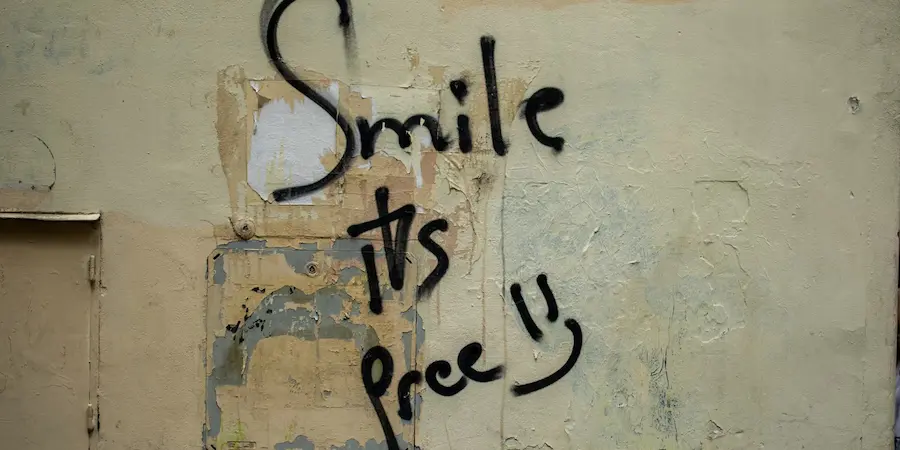
Would you like to have more spark when you speak, feel lighter about your mistakes, and connect better with people? Your sense of humor doesn’t appear out of nowhere: it’s shaped from childhood and is heavily influenced by your surroundings. That’s why you might laugh at the same things as your family, or need more context when someone makes a reference you don’t share. The good news is that you can train it. Not to become a comedian, but to communicate better, ease tensions, and take care of yourself when life gets tough.
Understanding what makes you laugh
Before trying to joke more, it’s worth observing your own laughter. The next time something makes you laugh, ask yourself: what’s here that is funny? It might be surprise, an exaggerated familiarity, an obvious contradiction, or the absurd. Writing down those elements helps you see the pattern. If you remove a piece, does the joke still work or lose strength? This small analysis shows you where your humor comes from.
Your way of thinking also matters. Some people enjoy wordplay; others get hooked on irony because they see the bigger picture. It’s not a rigid label, but looking at your strengths guides you. And, above all, remember that humor is social: there are shared codes that make laughter easier and references that, if not shared, confuse. That’s why sometimes you need a bit of context to get “the joke”.
How to detect humor in others
Many jokes rely on incongruity: something that doesn’t fit (an exaggerated detail, an impossible comparison, an intentionally made mistake). Useful signs:
- Voice and gestures that change: deliberately flat tone, exaggerated accent, long pauses, or looks toward the group seeking a reaction.
- Sarcasm: saying the opposite of what you think with a touch of theatricality (eye-rolling, feigned nonchalance).
- Irony: treating something minor as momentous, or using jargon deliberately excessively.
- Self-deprecation: recounting an embarrassing situation to provoke laughter, not pity.
If you’re unsure whether they’re teasing you or attacking you, a good question is: does this person usually want to hurt me or rather get closer? Sometimes a joke is just an awkward attempt to connect.

Responding without losing connection
Not everyone laughs out loud when something amuses them. If you’re more of a subtle smiler, you can say “that’s funny” or “I liked that” so the other person notices. And if you feel like it, practice give and take: respond with another joke along the same line (without forcing it) and see how it lands. That agility, besides being fun, conveys closeness.
And when something hurts? You don’t have to pretend. We all have sensitive moments. If the joke hits a nerve, you can calmly say you’d prefer to avoid that topic. If the “joke” is racist, sexist, or offensive, you have the right to set a boundary: “I can’t go along with that” or “Can you explain what’s funny about that?” helps to stop it without escalating the conflict. If someone justifies themselves with “it was just a joke,” you can clarify: “Yes, but it’s an offensive joke.” Setting the boundary doesn’t make you boring; it usually gives relief to others who were also uncomfortable.
Learn to joke without hurting
Introducing humor into your conversations doesn’t require perfect jokes. Often, the humor is in the delivery: telling something absurd as if it were the most normal thing in the world. Start with shared topics (the weather, workload, everyday life) because they create a sense of tribe. And look after the people present; if you mention someone, make it to highlight a virtue with a kind twist.
- Avoid jokes about appearance, even “positive” ones. They put the other person in an awkward position and rarely add anything.
- If you talk about mutual friends, choose favorable aspects: “They’re so punctual I set my watch by them” is better than pointing out flaws.
- Try turning a small personal mishap into a story: an illogical decision you made or an absurd detail from your day.
- Play with captions on your images: attributing impossible intentions to everyday objects can be a good creativity exercise.
Remember: the ordinary also connects. You don’t need the joke of the year for the group to smile and feel closer.
Humor to take care of yourself
Laughing at your mistakes, with kindness, is a great stress-reliever. Taking a bit of distance helps you put things into perspective and turn a stumble into an anecdote. That shift in attitude —less rigidity, less bitterness— makes room to find the lighter side of things. It’s not about denying pain, but about regaining perspective to move on.
Humor is also resilience. In difficult times, training it gives you an emotional lifeline: you can acknowledge the hardship and, at the same time, allow yourself a smile. When you notice you’re taking everything too seriously, look at the scene from the outside and ask yourself: “How would I tell this tomorrow so we’d laugh?”
When you don’t understand a joke
Not laughing at first doesn’t mean you “have no sense of humor.” Ask yourself if you thought it was a literal statement or a mistake, and what social context you were missing. Sometimes, with a hint, everything falls into place. Asking someone to explain it doesn’t kill the magic; in fact, it can bring you closer to the person and help you see why it made them laugh.
Explore formats to discover what works for you. Some connect more with stand-up, others enjoy novels or cartoons because humor in writing resonates better with them. If a style doesn’t engage you, try another, and look for voices with experiences similar to yours: shared background makes complicity easier. Don’t get frustrated if it takes time to find “your” humor; it’s normal that most comedies don’t work for all of us equally.
In short: observe, try, and refine. Your sense of humor is a trainable skill that can improve your conversations, your relationships, and your well-being. You don’t need to be the funniest person in the group; it’s enough to find your tone, respect boundaries, and allow yourself to play a bit more with the absurdities of everyday life.