
Do you want to be more productive but don’t know where to start? Relax — it’s not about working more hours or using brute force. Productivity has much more to do with organization, focus and small daily decisions. Here I share a simple, realistic plan based on strategies that work so your day is productive without wearing you out.
Plan your day: 3 priorities and deep blocks
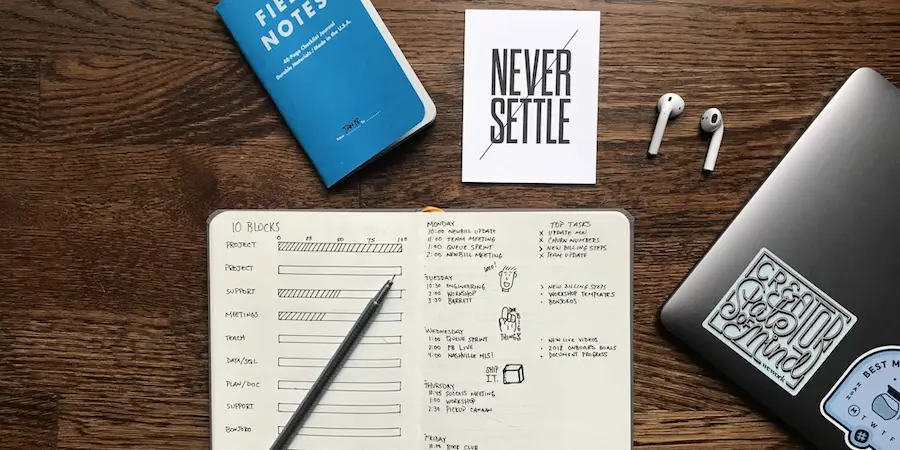
Set aside 5–10 minutes at night (or when you wake up) to sketch your day. Write down the essentials and choose your 3 key tasks: the ones that, if you complete them, will make you feel the day was a win. Place them in the morning and protect them with uninterrupted work blocks (for example, 90 minutes). Leave administrative tasks, emails and organizing for later.
- Divide the day into segments so you don’t spend hours on the same thing.
- Include real breaks and a clear end-of-day routine.
- If you plan in the morning, get up 5–10 minutes earlier so you don’t start in a rush.
This small planning ritual clears your mind, reduces noise and gives you a clear guide to act without wasting time deciding at each step.
Protect your attention: fewer screens, more single-tasking
Distraction is the great thief of time. If you find yourself constantly returning to your phone, cut it off at the source: turn off notifications, leave the phone in another room or use apps that block social networks during your work blocks. Your brain performs better when it does one thing at a time.
- Avoid mixing tasks (replying to emails while preparing a report, for example).
- Remove background stimuli: no radio, no TV.
- Remember that switching activities forces your brain to recalibrate and drains energy.
The famous feeling of “flow” appears when you immerse yourself in a single task. Every jump to something else breaks that state and makes you slower.
Tidy your environment: keep what matters in sight
Chaos draws attention and scatters it. At the end of the day, spend a few minutes decluttering: throw away papers, put away what you don’t use and leave the space ready to start light. A minimalist desk in the morning saves you decisions and invites you to act.
- “Out of sight, out of mind”… and the reverse: put priorities in front of you and remove the rest.
- Keep only what you will use during that work block within reach.
This small gesture makes your environment work in your favor: what you see suggests what to do, without resistance.
Mornings for essentials and breaks that help
Do the most important things first. If you have important calls or must present a proposal, try to do it before midday. Starting by ticking off the important items creates positive momentum for the rest of the day. Feeling an energy drop in the afternoon at home? A short nap of about 20 minutes can reset you.
And don’t skip breaks. Stand up to stretch, take a breath, walk a little: you’ll return with a fresher mind and your body will thank you. If you struggle to keep the rhythm, try the Pomodoro technique: 25 minutes of focus and 5 minutes of rest, repeating cycles.
Give meaning to what you do and reward yourself
Before you start, ask yourself: why does this task matter? Connecting each action to a purpose —even a small one— improves your willingness and helps you sustain the effort. From filling a timesheet to organizing a folder: everything contributes to something bigger if you find the thread.
- Reinforce the habit with small rewards: a coffee after planning the day, a treat after finishing a report.
- Place breaks immediately after a productive block: they are both reward and recovery.
The combination of meaning + reinforcement turns “I have to” into “I choose to,” and that changes the game.
Small habits: start with 5 minutes
To adopt a new routine, lower the entry barrier: commit to 5 minutes a day. The following week, increase it to 10 and maintain that time for a couple of weeks. Repeating at the same time helps the brain automate it. This method is ideal for anchoring practices like meditating, reading or doing some exercise in the morning.
- The first days are harder: persevere and let repetition do its work.
- If you’re adopting a new system, a long weekend or a vacation can help you get started by lowering baseline stress.
Small but consistent beats big and intermittent. The key is to make it so easy that you have no excuse not to do it.
Take care of your energy: sleep, food and movement
It’s impossible to sustain productivity if you don’t feel well. Prioritize regular rest: try to sleep around 8 hours and keep stable bed and wake times. Eat balanced meals (lean proteins, vegetables and whole grains) and move your body at least 150 minutes per week with the activity you prefer: running, cycling, weights…
- Don’t forget the mental and emotional side: meditation or yoga can help you stay centered.
- Reserve personal time: meet friends, read, pursue hobbies. Resting is also productive in the long run.
When your body and mind are cared for, productivity tools fit in without friction.
Close the day well and avoid extending work hours
Just as you have a start, create a “shutdown” ritual: finish pending tasks, tidy up, note tomorrow’s focus and switch off. Ending the day the same way each day helps you disconnect and keeps your head clear for your personal life.
And remember: working more hours doesn’t mean producing more. We tend to stretch tasks when we know we’ll stay late. Better quality focus in less time than endless days that only wear you down.
Your plan in summary
- Plan 5–10 minutes and choose 3 key tasks with deep blocks.
- Remove distractions and commit to single-tasking.
- Tidy your space and keep priorities visible.
- Do essentials in the morning and respect breaks (Pomodoro if it helps).
- Connect each task to a purpose and give yourself small rewards.
- Build habits with micro-actions of 5–10 minutes.
- Take care of sleep, diet and exercise, and close the day with a ritual.
Start with one or two ideas and put them into practice today. Productivity is not a race: it’s a lifestyle built with short, consistent and kind steps toward yourself.
.